Roe rice, known in Korean as al bap—al meaning egg and bap meaning rice—is traditionally served in modest portions, smaller than the generous rice bowls more familiar to many diners. The dish is simple but deeply expressive, built around fermented pollock roe known as myeongnanjeot, an ingredient prized in Korean cuisine for its briny intensity and delicate texture.
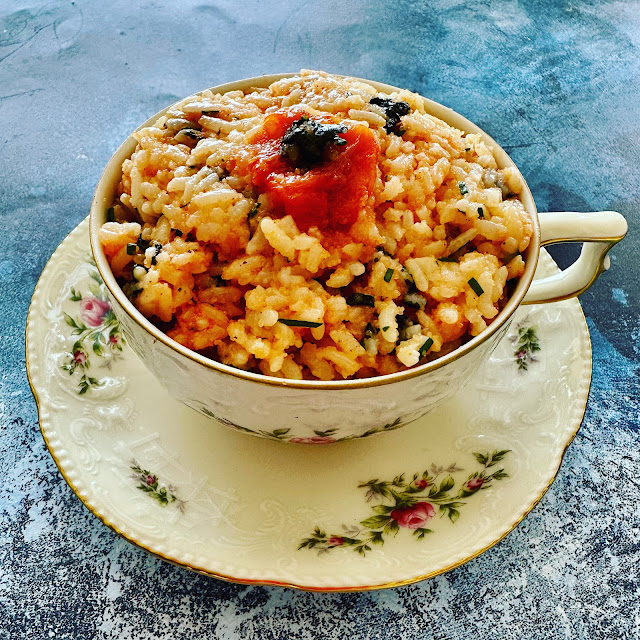
The idea of serving this roe rice in teacups rather than bowls came to me during the Homage to Grandma dinner at Kinkan, where Chef Nan Yimcharoen honored her grandmother through a menu rooted in memory and heritage. The gesture lingered with me: how food, even in its smallest form, can carry the weight of personal history.
This Roe Rice Teacup is my own quiet homage to my maternal grandmother. At its center is myeongnanjeot, an ingredient whose presence on the Korean peninsula dates back centuries, carrying with it a history shaped by hardship, endurance, and the cultural sentiment known as han. My intention here is not to dwell in that sorrow, but to honor something more enduring—the perseverance that my people have carried through generations.
Mix all the ingredients in a bowl. Spoon the mixture into a teacup to the rim, with a small amount remaining. Serve and enjoy.
INGREDIENTS
two fermented pollock roes, crumbled
three-quarters teaspoon of finely chopped chives
one teaspoon of sesame oil
one cup of cooked white rice
a half sheet of roasted seaweed, crumbled
Mix all the ingredients in a bowl. Spoon the mixture into a teacup to the rim, with a small amount remaining. Serve and enjoy.
_____
More recipes:
Comments
Post a Comment